
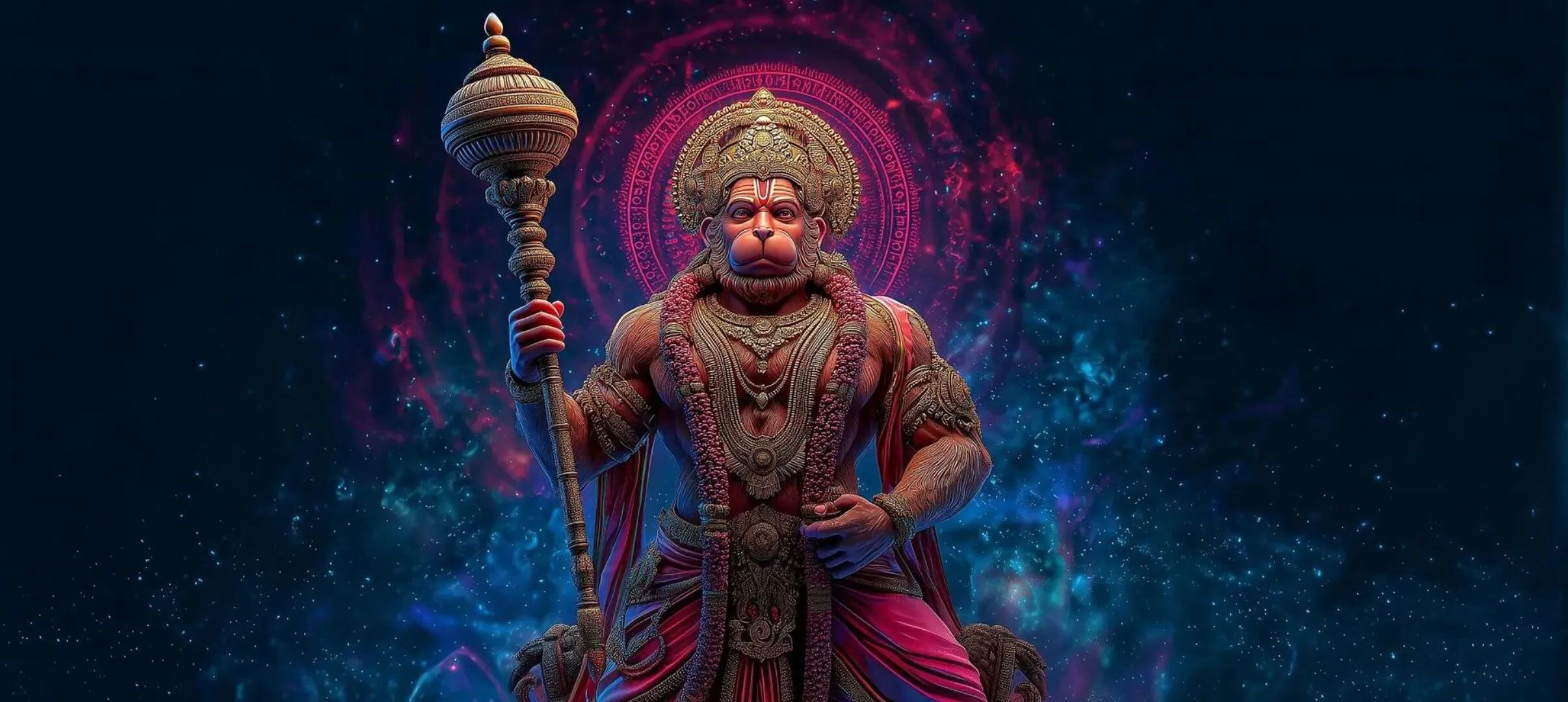
The Hanuman Chalisa is one of the most beloved devotional prayers dedicated to Lord Hanuman, the symbol of courage, wisdom, strength, and unwavering devotion to Lord Rama. Recited by millions of devotees around the world, this sacred hymn offers a way to remember Hanuman’s virtues and reflect on the power of faith and service. If you are looking for the Hanuman Chalisa in English, this guide provides the complete 40 chaupais in easy Roman transliteration, along with a simple English meaning for every verse. You will also find the opening and closing dohas, pronunciation tips, and answers to common questions.
Whether you grew up listening to the Hanuman Chalisa or are discovering it for the first time, this guide will help you follow the words and understand their devotional meaning.
What Is the Hanuman Chalisa?
The Hanuman Chalisa is a Hindu devotional hymn traditionally attributed to Goswami Tulsidas, the celebrated poet-saint associated with the Ramcharitmanas. It was composed in Awadhi, a language closely related to Hindi.
The word Chalisa comes from chalis, meaning forty. The hymn contains 40 chaupais, framed by two opening dohas and a concluding doha.
The verses praise Hanuman’s extraordinary strength, intelligence, humility, courage, and dedication to Lord Rama. They also recount important episodes associated with Hanuman in the Ramayana tradition.
For devotees, reciting the Chalisa is a spiritual practice that encourages faith, perseverance, humility, and inner strength.
Hanuman Chalisa in English: Opening Doha
Before the 40 chaupais, the Hanuman Chalisa begins with two introductory dohas.
Opening Doha 1
Shri Guru Charan Saroj Raj, Nij Manu Mukuru Sudhari,
Baranau Raghubar Bimal Jasu, Jo Dayaku Phal Chari.
English meaning:
With the dust of my Guru’s lotus feet, I cleanse the mirror of my mind. I sing the pure glory of Lord Rama, who grants the four aims of human life: dharma, artha, kama, and moksha.
Explanation: The opening verse emphasizes humility and the importance of spiritual guidance. Before praising Lord Rama, the poet seeks to purify his mind.
Opening Doha 2
Buddhiheen Tanu Janike, Sumirau Pavan-Kumar,
Bal Buddhi Vidya Dehu Mohi, Harahu Kalesh Vikar.
English meaning:
Recognizing my limited wisdom, I remember Hanuman, the Son of the Wind. Please bless me with strength, intelligence, and knowledge, and remove my troubles and shortcomings.
Explanation: This verse is a prayer for wisdom, courage, and the ability to overcome personal weaknesses.
Complete Hanuman Chalisa: All 40 Chaupais with English Meaning
The following transliteration uses familiar Roman spellings to help English readers follow the traditional Awadhi verses. Small spelling variations may appear across editions.
Chaupai 1
Jai Hanuman Gyan Gun Sagar,
Jai Kapis Tihun Lok Ujagar.
Meaning: Victory to Hanuman, the ocean of wisdom and virtue. Glory to the lord of the vanaras, whose radiance illuminates the three worlds.
Explanation: Hanuman is praised for his immense knowledge, noble qualities, and divine greatness.
Chaupai 2
Ram Doot Atulit Bal Dhama,
Anjani-Putra Pavan Sut Nama.
Meaning: You are the messenger of Lord Rama and the abode of incomparable strength. You are the son of Mother Anjani and are known as the Son of the Wind.
Explanation: This verse celebrates Hanuman’s divine identity, extraordinary power, and devoted service to Rama.
Chaupai 3
Mahabir Bikram Bajrangi,
Kumati Nivar Sumati Ke Sangi.
Meaning: O mighty hero with strength like a thunderbolt, you remove misguided thoughts and support wisdom and good judgment.
Explanation: Hanuman represents courage guided by wisdom. His example inspires people to overcome harmful thoughts and choose the right path.
Chaupai 4
Kanchan Baran Biraj Subesa,
Kanan Kundal Kunchit Kesa.
Meaning: Your golden complexion shines brightly, and you wear beautiful attire, earrings, and curly hair.
Explanation: This verse describes Hanuman’s radiant and majestic appearance.
Chaupai 5
Hath Bajra Aur Dhvaja Birajai,
Kandhe Moonj Janeu Sajai.
Meaning: You hold a thunderbolt and a flag in your hands, and a sacred thread made from moonj grass adorns your shoulder.
Explanation: Hanuman’s traditional attributes represent strength, courage, and spiritual discipline.
Chaupai 6
Shankar Suvan Kesari Nandan,
Tej Pratap Maha Jag Vandan.
Meaning: You are revered as an emanation of Shankar and the son of Kesari. Your brilliance and glory are honored throughout the world.
Explanation: This verse celebrates Hanuman’s divine associations and the universal reverence he receives.
Chaupai 7
Vidyavan Guni Ati Chatur,
Ram Kaj Karibe Ko Atur.
Meaning: You are learned, virtuous, and exceptionally wise, always eager to carry out Lord Rama’s work.
Explanation: Hanuman combines knowledge and intelligence with a readiness to serve. His wisdom is expressed through action.
Chaupai 8
Prabhu Charitra Sunibe Ko Rasiya,
Ram Lakhan Sita Man Basiya.
Meaning: You delight in hearing the stories of the Lord, and Rama, Lakshmana, and Sita dwell in your heart.
Explanation: Hanuman’s devotion is rooted in his love for Rama and his family. Their presence remains central to his life.
Chaupai 9
Sukshma Roop Dhari Siyahi Dikhava,
Vikat Roop Dhari Lank Jarava.
Meaning: You assumed a small form to appear before Sita and a fearsome form to burn Lanka.
Explanation: Hanuman adapts his abilities to the situation, showing both gentleness and formidable strength when required.
Chaupai 10
Bhima Roop Dhari Asur Sanhare,
Ramachandra Ke Kaj Sanvare.
Meaning: You assumed a mighty form and defeated demons, accomplishing the mission of Lord Rama.
Explanation: This verse celebrates Hanuman’s bravery and his role in overcoming the forces opposing Rama.
Chaupai 11
Laye Sanjivan Lakhan Jiyaye,
Shri Raghubir Harashi Ur Laye.
Meaning: You brought the life-restoring herb that revived Lakshmana, and Lord Rama joyfully embraced you.
Explanation: Hanuman’s devotion is demonstrated through his extraordinary efforts to save Lakshmana and support Rama.
Chaupai 12
Raghupati Kinhi Bahut Badai,
Tum Mama Priya Bharat-Hi-Sam Bhai.
Meaning: Lord Rama praised you greatly, declaring that you were as dear to him as his own brother Bharata.
Explanation: This verse highlights the deep affection and trust Rama has for Hanuman.
Chaupai 13
Sahas Badan Tumharo Jas Gavai,
As Kahi Shripati Kanth Lagavai.
Meaning: Lord Rama embraced you, saying that even a thousand mouths could sing your glory.
Explanation: Hanuman’s service and devotion are so extraordinary that his greatness cannot easily be expressed in words.
Chaupai 14
Sankadik Brahmadi Munisa,
Narad Sarad Sahit Ahisa.
Meaning: Sanaka and the other sages, Brahma and the great seers, Narada, Saraswati, and Shesha all sing your praise.
Explanation: The verse describes Hanuman’s greatness as celebrated by revered sages and divine beings.
Chaupai 15
Jam Kuber Digpal Jahan Te,
Kavi Kovid Kahi Sake Kahan Te.
Meaning: Even Yama, Kubera, the guardians of the directions, and the greatest poets cannot fully describe your glory.
Explanation: Hanuman’s virtues are presented as beyond the complete understanding or expression of even the wisest beings.
Chaupai 16
Tum Upkar Sugrivahi Kinha,
Ram Milaye Rajpad Dinha.
Meaning: You helped Sugriva by bringing him to Lord Rama, who restored him to his rightful position as king.
Explanation: Hanuman’s wisdom and mediation helped form the alliance between Rama and Sugriva.
Chaupai 17
Tumharo Mantra Vibhishan Mana,
Lankeshwar Bhaye Sab Jag Jana.
Meaning: Vibhishana followed your counsel and became the ruler of Lanka, as the whole world knows.
Explanation: This verse celebrates Hanuman’s sound advice and the importance of choosing righteousness.
Chaupai 18
Yug Sahastra Yojan Par Bhanu,
Leelyo Tahi Madhur Phal Janu.
Meaning: You leapt toward the sun, which was thousands of yojanas away, mistaking it for a sweet fruit.
Explanation: This verse recalls the traditional story of Hanuman’s extraordinary childhood strength.
Chaupai 19
Prabhu Mudrika Meli Mukh Mahee,
Jaladhi Langhi Gaye Acharaj Nahee.
Meaning: Carrying Lord Rama’s ring in your mouth, you crossed the ocean; for one of your abilities, this was no wonder.
Explanation: Hanuman’s journey across the ocean demonstrates courage, determination, and complete dedication to Rama’s mission.
Chaupai 20
Durgam Kaj Jagat Ke Jete,
Sugam Anugrah Tumhare Tete.
Meaning: The difficult tasks of the world become easier through your grace.
Explanation: Devotees see Hanuman as a source of encouragement and strength when facing difficult circumstances.
Chaupai 21
Ram Duware Tum Rakhvare,
Hot Na Agya Binu Paisare.
Meaning: You stand as the guardian at Lord Rama’s door; no one enters without your permission.
Explanation: This verse portrays Hanuman as a devoted protector and a guardian of the path to Rama.
Chaupai 22
Sab Sukh Lahai Tumhari Sarna,
Tum Rakshak Kahu Ko Darna.
Meaning: Those who seek refuge in you find comfort and peace. With you as their protector, why should they live in fear?
Explanation: The verse expresses the reassurance devotees find in faith, trust, and Hanuman’s protective presence.
Chaupai 23
Aapan Tej Samharo Aapai,
Teenon Lok Hank Te Kanpai.
Meaning: You alone can control your immense power, and your mighty roar makes the three worlds tremble.
Explanation: Hanuman’s strength is extraordinary, yet he possesses the discipline to use it appropriately.
Chaupai 24
Bhoot Pisach Nikat Nahi Aavai,
Mahabir Jab Naam Sunavai.
Meaning: Harmful spirits and negative forces are said to stay away when the name of the great hero Hanuman is invoked.
Explanation: Devotees understand this verse as an expression of faith in Hanuman’s protective power and the courage his name inspires.
Chaupai 25
Nasai Rog Harai Sab Peera,
Japat Nirantar Hanumat Beera.
Meaning: Devotees pray for relief from illness and suffering through the continuous remembrance of brave Hanuman.
Explanation: This verse expresses hope, comfort, and spiritual strength. Prayer may support emotional well-being, but it should not replace appropriate medical care.
Chaupai 26
Sankat Te Hanuman Chhudavai,
Man Kram Vachan Dhyan Jo Lavai.
Meaning: Hanuman helps devotees through difficulties when they remember him sincerely in thought, action, and speech.
Explanation: The verse emphasizes wholehearted devotion and consistency between what a person thinks, says, and does.
Chaupai 27
Sab Par Ram Tapasvi Raja,
Tin Ke Kaj Sakal Tum Saja.
Meaning: Lord Rama, the great ascetic king, reigns above all, and you accomplish his tasks.
Explanation: Hanuman’s actions are guided by devotion to Rama and a commitment to his righteous purposes.
Chaupai 28
Aur Manorath Jo Koi Lavai,
Soi Amit Jivan Phal Pavai.
Meaning: Whoever approaches you with sincere wishes and devotion may receive abundant blessings and fulfillment.
Explanation: The verse expresses the devotee’s faith in Hanuman’s grace and the hope that sincere prayers will bear fruit.
Chaupai 29
Charon Yug Partap Tumhara,
Hai Parsiddh Jagat Ujiyara.
Meaning: Your glory shines throughout all four ages and is celebrated across the world.
Explanation: Hanuman’s virtues and devotion are regarded as timeless and relevant to every generation.
Chaupai 30
Sadhu Sant Ke Tum Rakhvare,
Asur Nikandan Ram Dulare.
Meaning: You protect saints and virtuous people, destroy evil forces, and are beloved by Lord Rama.
Explanation: Hanuman represents the defense of righteousness and the courage to oppose wrongdoing.
Chaupai 31
Ashta Siddhi Nau Nidhi Ke Data,
As Bar Din Janaki Mata.
Meaning: Mother Janaki granted you the boon of bestowing the eight spiritual accomplishments and nine treasures.
Explanation: This verse refers to traditional spiritual powers and treasures associated with Hanuman’s blessings.
Chaupai 32
Ram Rasayan Tumhare Pasa,
Sada Raho Raghupati Ke Dasa.
Meaning: You possess the divine essence of devotion to Rama and remain forever his servant.
Explanation: Hanuman’s greatest treasure is his unwavering devotion and loving service to Rama.
Chaupai 33
Tumhare Bhajan Ram Ko Pavai,
Janam Janam Ke Dukh Bisaravai.
Meaning: Through devotion to you, one draws closer to Lord Rama and finds relief from the sorrows of repeated births.
Explanation: The verse presents devotion to Hanuman as a path toward Rama and spiritual liberation.
Chaupai 34
Ant Kaal Raghubar Pur Jai,
Jahan Janma Hari Bhakt Kahai.
Meaning: At life’s end, your devotee reaches the abode of Rama and, if born again, is known as a devotee of the Lord.
Explanation: This verse expresses the traditional devotional hope of attaining Rama’s abode and remaining connected to divine service.
Chaupai 35
Aur Devta Chitt Na Dharai,
Hanumat Sei Sarva Sukh Karai.
Meaning: The devotee who remains focused on Hanuman finds comfort and blessings through his service and grace.
Explanation: This verse emphasizes focused devotion to Hanuman as a chosen spiritual path.
Chaupai 36
Sankat Kate Mite Sab Peera,
Jo Sumirai Hanumat Balbeera.
Meaning: Difficulties and suffering are said to diminish for those who remember Hanuman, the mighty and courageous hero.
Explanation: The verse encourages devotees to turn to faith for courage and perseverance during challenging times.
Chaupai 37
Jai Jai Jai Hanuman Gosain,
Kripa Karahu Gurudev Ki Nyain.
Meaning: Victory, victory, victory to Lord Hanuman. Please shower your grace upon me as a revered spiritual guide would.
Explanation: The devotee praises Hanuman and humbly asks for his guidance and blessings.
Chaupai 38
Jo Sat Bar Path Kare Koi,
Chhutahi Bandi Maha Sukh Hoi.
Meaning: The verse declares that one who recites the Chalisa a hundred times is freed from bondage and attains great happiness.
Explanation: This is a traditional devotional promise associated with the hymn. Devotees interpret it spiritually as freedom from inner limitations and attachment.
Chaupai 39
Jo Yah Padhe Hanuman Chalisa,
Hoye Siddhi Sakhi Gaurisa.
Meaning: Whoever recites this Hanuman Chalisa may attain spiritual accomplishment; Lord Shiva is invoked as the witness to this promise.
Explanation: The verse expresses confidence in the spiritual value of sincere and regular recitation.
Chaupai 40
Tulsidas Sada Hari Chera,
Keejai Nath Hriday Mah Dera.
Meaning: Tulsidas, forever the servant of the Lord, prays: O Hanuman, please make your dwelling in my heart.
Explanation: The final chaupai ends with humility and surrender. The poet asks Hanuman to remain forever present in his heart.
Closing Doha of the Hanuman Chalisa
Pavan Tanay Sankat Haran, Mangal Murti Roop,
Ram Lakhan Sita Sahit, Hriday Basahu Sur Bhoop.
English meaning:
O Son of the Wind, remover of difficulties and embodiment of auspiciousness, please dwell in my heart together with Lord Rama, Lakshmana, and Sita.
Explanation: The closing prayer asks Hanuman to bring divine presence, peace, and auspiciousness into the devotee’s heart.
How to Pronounce the Hanuman Chalisa in English
You do not need to read Devanagari to begin learning the Hanuman Chalisa. Roman transliteration helps English-speaking readers follow the traditional words, although some sounds do not have exact English equivalents.
Here are a few helpful tips:
- Jai: Say it approximately like “j-eye.”
- Ram: Keep the vowel open and slightly longer than in the English word “ram.”
- Hanuman: Pronounce the syllables clearly rather than rushing through the name.
- Gyan: The opening consonant represents a sound that may be unfamiliar to English speakers; listen to a reliable traditional recitation to learn it.
- Bhakti: The “bh” begins with a gentle breath, not just an English “b.”
- Chaupai: This refers to the traditional four-part verse form used in the hymn.
Tips for Beginners
- Begin with a few verses at a time.
- Listen to a trusted recitation while following the Roman text.
- Read slowly and pause at the end of each line.
- Learn the meaning instead of focusing only on memorization.
- Follow a consistent pace that feels comfortable.
The goal is not perfect pronunciation on the first attempt. A patient approach can help you become more familiar with the text.
What Are the Spiritual Benefits of Reciting the Hanuman Chalisa?
In Hindu devotional tradition, the Hanuman Chalisa is associated with several spiritual benefits.
1. Courage and confidence: Hanuman’s bravery serves as an example of facing difficult situations with determination.
2. Devotion to Lord Rama: The hymn repeatedly emphasizes Hanuman’s selfless service and love for Rama.
3. Focus and reflection: Regular recitation can provide a structured period for prayer and contemplation.
4. Hope during difficult times: Many devotees turn to the Chalisa when seeking reassurance, strength, and a sense of spiritual protection.
5. Humility and discipline: The verses encourage the cultivation of wisdom, service, and control over one’s actions.
These are devotional beliefs and personal experiences rather than guaranteed medical or material outcomes.
When Should You Read the Hanuman Chalisa?
Many devotees recite the Hanuman Chalisa on Tuesdays and Saturdays, days traditionally associated with Lord Hanuman. Others include it in their daily morning or evening prayers.
There is no need to wait for a particular day to begin. You can choose a quiet time when you can focus on the words and their meaning.
A simple practice for beginners is to:
- Sit comfortably in a quiet place.
- Take a few calm breaths.
- Begin with the opening dohas.
- Read the 40 chaupais at a comfortable pace.
- Finish with the closing doha and a moment of reflection.
You can adapt this routine to your own circumstances and devotional tradition.
Frequently Asked Questions About Hanuman Chalisa in English
1. What is the Hanuman Chalisa in English?
The Hanuman Chalisa in English usually refers to the original hymn written in Roman letters so that readers who cannot read Devanagari can follow it. It can also refer to an English translation explaining the meaning of each verse.
2. Who wrote the Hanuman Chalisa?
The Hanuman Chalisa is traditionally attributed to Goswami Tulsidas, the revered poet-saint associated with the Ramcharitmanas.
3. How many verses are in the Hanuman Chalisa?
The central hymn contains 40 chaupais. It is traditionally framed by two opening dohas and one closing doha.
4. Can I read the Hanuman Chalisa in English letters?
Yes. Roman transliteration allows readers unfamiliar with Devanagari to follow the words. Listening to a traditional recitation can also help with pronunciation.
5. How long does it take to recite the Hanuman Chalisa?
The time varies with the pace of recitation. Many people complete it in approximately 5–10 minutes, while slower recitation may take longer.
6. Can beginners read the Hanuman Chalisa every day?
Yes. Beginners can start with a few verses or read the complete hymn at a comfortable pace. Understanding the meaning can make the practice more engaging.
7. Is Tuesday considered a special day for Hanuman?
Tuesday is traditionally associated with Lord Hanuman in many Hindu communities. Saturday is also a common day for his worship. Practices differ among families and regions.
8. What does the word “Chalisa” mean?
“Chalisa” comes from chalis, the Hindi and related North Indian word for forty. It refers to the 40 chaupais at the heart of the hymn.
9. What language was the Hanuman Chalisa originally written in?
It was composed in Awadhi, a language closely related to Hindi. The text is commonly printed in Devanagari and is also available in Roman transliteration.
10. Is the English meaning a word-for-word translation?
Not necessarily. The explanations in this article are simplified, meaning-based interpretations intended to help readers understand the devotional themes. Different translators may express some lines differently.
Final Thoughts About Hanuman Chalisa in English
The Hanuman Chalisa is more than a collection of devotional verses. It celebrates courage, wisdom, humility, service, and unwavering devotion to Lord Rama.
Reading it in English letters can make the hymn more accessible to people who are unfamiliar with Devanagari. Taking time to understand each verse can also help readers connect with its stories and spiritual themes.
Whether you are learning your first chaupai or returning to a familiar daily prayer, approach the Hanuman Chalisa with patience, sincerity, and respect for the tradition.
Jai Shri Ram! Jai Hanuman!
About Vatsa Bhakti
At Vatsa Bhakti, our aim is to make devotional stories, prayers, and spiritual traditions easier to explore and understand. Continue learning through our guides to Lord Hanuman, Shri Ram, and other Hindu devotional texts.