
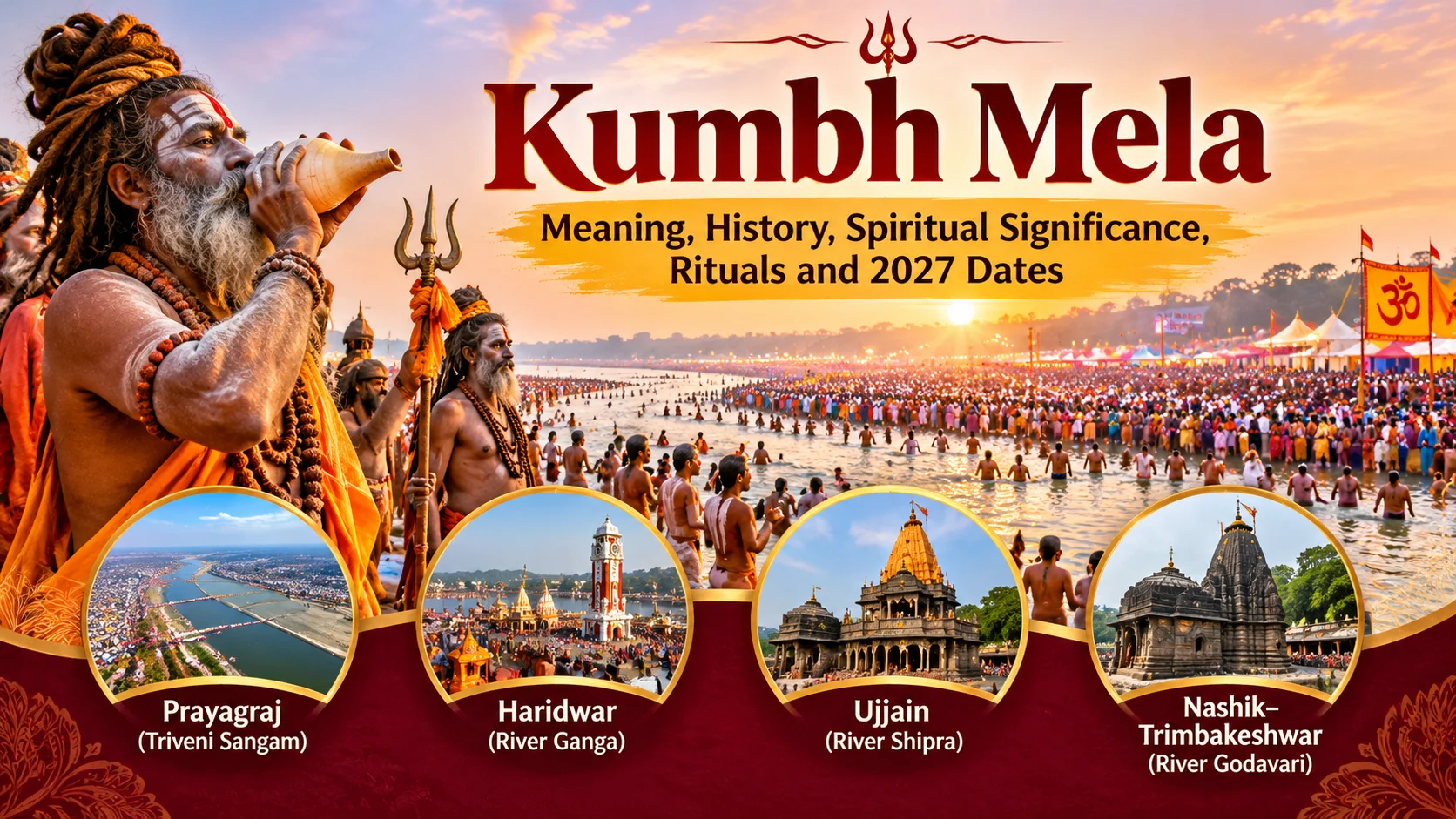
Imagine standing beside a sacred Indian river as millions of pilgrims, saints, spiritual teachers and visitors gather for one extraordinary event. The air is filled with devotional songs, the sound of temple bells, prayers and the chants of ancient Sanskrit mantras. This is the experience of Kumbh Mela, one of the most remarkable religious gatherings in the world.
For Hindus, Kumbh Mela is much more than a festival. It is a sacred pilgrimage, a celebration of faith and an opportunity for spiritual reflection. People travel from different parts of India and around the world to participate in holy bathing rituals, meet spiritual leaders and experience India’s ancient religious traditions.
But what exactly is Kumbh Mela? Why do millions of people gather near sacred rivers? What is the story behind the festival, and why is it celebrated at four different locations?
If you are discovering Hinduism or planning to visit India, this guide will help you understand everything about Kumbh Mela.
What Is Kumbh Mela?
Kumbh Mela is a major Hindu religious pilgrimage held at four sacred locations in India: Prayagraj, Haridwar, Ujjain and Nashik–Trimbakeshwar.
The festival is centred around a sacred river bath, known as Snan. Hindu devotees believe that bathing in these holy rivers during astrologically significant periods can help cleanse spiritual impurities, bring religious merit and support the journey towards Moksha, or liberation from the cycle of birth and death.
The word Kumbh comes from Sanskrit and means a pot or pitcher. Mela means a gathering or fair.
Together, Kumbh Mela refers to a sacred gathering associated with the divine pot of nectar described in Hindu mythology.
Unlike many annual religious festivals, Kumbh Mela follows specific astrological calculations involving the positions of Jupiter, the Sun and the Moon.
The gathering also includes:
- Holy bathing ceremonies.
- Religious processions.
- Prayers and devotional singing.
- Spiritual discussions and discourses.
- Meditation and yoga.
- Meetings with Hindu saints and spiritual teachers.
- Traditional religious and cultural activities.
In 2017, UNESCO added Kumbh Mela to its Representative List of the Intangible Cultural Heritage of Humanity.
The History and Mythology Behind Kumbh Mela
The spiritual origins of Kumbh Mela are closely connected with one of the most famous stories in Hindu mythology: Samudra Manthan, or the churning of the cosmic ocean.
According to Hindu scriptures, the Devas (gods) and Asuras (demons) joined forces to churn the ocean of milk in search of Amrit, the nectar of immortality.
They used Mount Mandara as the churning rod and the serpent Vasuki as the rope.
After a long and extraordinary process, several divine treasures emerged from the ocean. Among them was a pot containing Amrit, the nectar believed to grant immortality.
When the nectar appeared, a struggle developed between the Devas and Asuras over who would possess it.
According to popular Hindu tradition, during this struggle, drops of Amrit fell at four places on Earth:
- Prayagraj (Uttar Pradesh)
- Haridwar (Uttarakhand)
- Ujjain (Madhya Pradesh)
- Nashik (Maharashtra)
These four locations became sacred pilgrimage destinations associated with Kumbh Mela.
The story of Samudra Manthan is not simply a tale about gods and demons. It also carries a deeper spiritual message about the struggle between positive and negative forces, the search for truth and the importance of spiritual wisdom.
For devotees, Kumbh Mela represents an opportunity to move closer to divine consciousness.
Why Is Kumbh Mela Celebrated Every 12 Years?
One of the most interesting aspects of Kumbh Mela is its connection with Hindu astronomy and astrology.
The festival is organised according to specific planetary positions, particularly the position of Jupiter (Brihaspati), along with the Sun and Moon.
Jupiter takes approximately 12 years to complete one orbit around the Sun. This astronomical cycle is closely associated with the traditional timing of Kumbh Mela.
Each of the four pilgrimage locations has its own astrological conditions for organising the event.
The main locations are:
- Prayagraj: The sacred gathering takes place at the Triveni Sangam.
- Haridwar: The festival is associated with the sacred River Ganga.
- Ujjain: The Kumbh gathering is associated with the River Shipra.
- Nashik–Trimbakeshwar: The festival takes place along the River Godavari.
Each location generally hosts its Kumbh approximately once every 12 years. Because the four locations follow different astrological timings, a Kumbh gathering takes place somewhere in India roughly every three years.
Four Sacred Places Where Kumbh Mela Is Celebrated
The four locations of Kumbh Mela have their own religious importance, traditions and sacred rivers.
1. Prayagraj Kumbh Mela – Uttar Pradesh
Prayagraj, formerly known as Allahabad, is considered one of the most sacred pilgrimage destinations in Hinduism.
The main attraction is Triveni Sangam, the sacred confluence of three rivers:
- River Ganga
- River Yamuna
- River Saraswati (believed to be an invisible or mystical river)
Hindu devotees consider the Sangam particularly sacred because of the spiritual significance associated with the meeting of these rivers.
Millions of pilgrims visit Prayagraj during Kumbh Mela to take a holy dip at the Sangam.
The 2025 Maha Kumbh Mela was held in Prayagraj and attracted visitors from across India and abroad.
2. Haridwar Kumbh Mela – Uttarakhand
Haridwar is one of the seven sacred cities in Hindu tradition.
The city is situated on the banks of the River Ganga, where the river emerges from the Himalayan region and enters the plains.
One of the most important locations is Har Ki Pauri, a famous ghat where devotees gather for prayers and holy bathing.
During Kumbh Mela, Haridwar becomes a major centre of spiritual activities.
Visitors can also experience the famous Ganga Aarti, a devotional ceremony in which priests offer prayers to the river using lamps, flowers and sacred chants.
3. Ujjain Kumbh Mela – Madhya Pradesh
Ujjain is an ancient Indian city famous for its religious heritage and the Mahakaleshwar Jyotirlinga Temple.
The Kumbh gathering at Ujjain is known as Simhastha Kumbh Mela.
It takes place on the banks of the sacred River Shipra.
The festival is associated with important astrological positions, particularly Jupiter’s presence in Leo (Simha).
Pilgrims visit the city’s sacred ghats to participate in bathing rituals and religious ceremonies.
Ujjain is also an important destination for devotees of Lord Shiva.
4. Nashik–Trimbakeshwar Kumbh Mela – Maharashtra
Nashik and Trimbakeshwar are two important Hindu pilgrimage destinations in Maharashtra.
The Kumbh Mela here is also known as Simhastha Kumbh because of its association with Jupiter entering Leo.
The festival takes place along the sacred River Godavari.
Trimbakeshwar is especially important because it is home to one of the twelve Jyotirlingas of Lord Shiva.
The Nashik–Trimbakeshwar Simhastha is particularly interesting because its major bathing ceremonies take place at two sacred locations: Ramtirth in Nashik and Kushavarta Tirth in Trimbakeshwar.
The next major gathering is the Nashik–Trimbakeshwar Simhastha Kumbh Mela 2027.
Kumbh Mela 2027: Dates, Location and Important Bathing Days
If you are planning to visit India to experience Kumbh Mela, the upcoming Nashik–Trimbakeshwar Simhastha in 2027 is an important opportunity.
The official Maharashtra government website lists the major Mela period from June 15 to September 30, 2027.
The important Amrit Snan dates announced for 2027 are:
| Event | Date |
|---|---|
| First Amrit Snan | August 2, 2027 |
| Second Amrit Snan | August 31, 2027 |
| Third Amrit Snan – Nashik | September 11, 2027 |
| Third Amrit Snan – Trimbakeshwar | September 12, 2027 |
The official Simhastha programme also began with Dhwajarohan on October 31, 2026, and the wider official event period extends into 2028.
Important: Event schedules, bathing timings and access arrangements can change. Visitors should confirm the latest information through the official Maharashtra government portal before booking their journey.
What Is Amrit Snan in Kumbh Mela?
Amrit Snan is one of the most important bathing ceremonies during Kumbh Mela.
The word Amrit means nectar of immortality, while Snan means bathing.
During these special bathing occasions, saints, sadhus, members of different akhadas and ordinary pilgrims enter the sacred river according to traditional ceremonial arrangements.
The processions of saints and Naga Sadhus are among the most fascinating sights of Kumbh Mela.
Devotees believe that taking a holy dip on these auspicious occasions brings spiritual benefits and religious merit.
The ceremony is deeply connected with the mythology of Samudra Manthan and the divine nectar of immortality.
Who Are Naga Sadhus and Why Are They Important?
One of the most recognisable aspects of Kumbh Mela is the presence of Naga Sadhus.
Naga Sadhus are Hindu ascetics who have renounced ordinary worldly life in pursuit of spiritual discipline and liberation.
They are particularly associated with Shaiva traditions and the worship of Lord Shiva.
Many Naga Sadhus cover their bodies with sacred ash, wear rudraksha beads and maintain traditional ascetic practices.
Some follow strict disciplines, including meditation, celibacy and detachment from material possessions.
During Kumbh Mela, Naga Sadhus participate in important religious processions and ceremonial bathing.
Their presence represents India’s long-standing traditions of renunciation, devotion and spiritual practice.
What Are Akhadas in Kumbh Mela?
An Akhada is an organised religious institution or group of Hindu ascetics.
Akhadas play an important role in organising the spiritual and ceremonial activities of Kumbh Mela.
They preserve traditional teachings, spiritual disciplines and religious practices.
Different Akhadas follow different traditions, including Shaiva and Vaishnava traditions.
During Kumbh Mela, members of these organisations participate in processions, spiritual discussions and sacred bathing ceremonies.
There are 13 recognised traditional Akhadas associated with the major Kumbh gatherings.
For visitors, observing the Akhada processions offers a valuable opportunity to understand the diversity of Hindu spiritual traditions.
What Can International Visitors Experience at Kumbh Mela?
For visitors from the United States, Canada, Australia and other countries, Kumbh Mela can be an extraordinary cultural and spiritual experience.
Even if you are not Hindu, you can learn about India’s ancient traditions and observe the religious practices associated with the festival respectfully.
Here are some experiences worth exploring:
1. Witness the Sacred River Bathing
Observe the traditional Snan ceremonies and understand why millions of devotees consider sacred rivers spiritually important.
2. Attend Ganga Aarti
Where available, attend an evening river worship ceremony. The sight of illuminated lamps, devotional singing and prayers creates a memorable atmosphere.
3. Meet Spiritual Teachers
Kumbh Mela brings together saints, spiritual teachers and religious scholars from different traditions.
You may have opportunities to attend public spiritual discussions and learn about Hindu philosophy.
4. Explore Hindu Culture
Observe traditional clothing, religious symbols, devotional music, yoga, meditation and spiritual ceremonies.
5. Visit Ancient Temples
Explore nearby temples and pilgrimage destinations to understand the historical and religious significance of the region.
How to Prepare for Kumbh Mela as a Foreign Tourist
If you are travelling from the USA, Canada or Australia, advance planning is essential.
Kumbh Mela attracts extremely large crowds, particularly on major bathing days.
Consider the following travel tips.
1. Plan Your Travel Early
Book your international flights, domestic transport and accommodation well in advance.
Major bathing dates can attract significantly larger crowds.
2. Choose Accommodation Carefully
Consider authorised hotels, registered camps and reputable accommodation providers.
Check the location and accessibility of your accommodation before making a booking.
3. Carry Essential Documents
Keep your passport, Indian visa, travel insurance and emergency contact information accessible.
International visitors should check current Indian visa requirements through official government channels.
4. Follow Local Safety Instructions
Stay within designated visitor areas and follow instructions from the police and event authorities.
Avoid entering restricted bathing areas or crowded processions without permission.
5. Take Care of Your Health
Carry drinking water, basic medicines, sunscreen and any personal medication you need.
Large gatherings can involve long walks, waiting periods and exposure to changing weather conditions.
6. Respect Religious Customs
Dress modestly, ask permission before photographing people and respect the privacy of saints and pilgrims.
Do not assume that every religious ceremony is open to photography or participation.
7. Stay Connected
Keep your phone charged, save your accommodation address and agree on a meeting point with your travel companions.
Follow official announcements for transport changes, crowd management and emergency information.
- Hindu Festival Calendar 2027 USA: Complete List of Hindu Festivals and Holidays
- Buy Premium Hindu Aarti Collection PDF – Read Traditional Hindu Aartis in Roman English
- Hindu Marriage Muhurat 2026 in New York: Auspicious Wedding Dates and 2027 Calendar
Why Is Kumbh Mela Important in Hinduism?
Kumbh Mela has a special place in Hindu religious life because it brings together several important spiritual ideas.
Purification: Devotees believe that bathing in sacred rivers during auspicious periods helps cleanse spiritual impurities.
Moksha: Many pilgrims undertake the journey with the hope of progressing towards liberation from the cycle of birth and death.
Faith and Devotion: The gathering provides an opportunity to express devotion through prayers, rituals and religious practices.
Spiritual Learning: Visitors can listen to religious teachers, attend discussions and learn about Hindu philosophy.
Community and Unity: Kumbh Mela brings together people from different regions, backgrounds and traditions.
For many Hindus, participating in Kumbh Mela is a deeply meaningful spiritual experience that may happen only a few times in their lifetime.
Kumbh Mela and UNESCO: Why Is It Recognised Worldwide?
Kumbh Mela was added to UNESCO’s Representative List of the Intangible Cultural Heritage of Humanity in 2017.
This recognition is important because Kumbh Mela is not simply a large religious gathering.
It represents living traditions, spiritual knowledge, oral teachings, rituals and cultural practices passed from one generation to another.
The event brings together ascetics, religious organisations, spiritual teachers and ordinary pilgrims.
It also demonstrates how traditional knowledge and religious customs continue to remain relevant in modern society.
UNESCO recognition helps highlight the cultural importance of Kumbh Mela to people around the world.
Year-wise Kumbh Mela Schedule
| Year | Kumbh Mela Location | Event |
|---|---|---|
| 2027 | Nashik–Trimbakeshwar, Maharashtra | Simhastha Kumbh |
| 2027 | Haridwar, Uttarakhand | Ardh Kumbh |
| 2028 | Ujjain, Madhya Pradesh | Simhastha Kumbh |
| 2029 | — | No major Kumbh expected |
| 2030 | — | No major Kumbh expected |
| 2031 | Prayagraj, Uttar Pradesh | Ardh Kumbh (projected) |
| 2032 | — | No major Kumbh expected |
| 2033 | Haridwar, Uttarakhand | Purna Kumbh (projected) |
| 2034 | — | No major Kumbh expected |
| 2035 | — | No major Kumbh expected |
| 2036 | — | No major Kumbh confirmed |
| 2037 | Prayagraj, Uttar Pradesh | Purna Kumbh (projected) |
| 2038 | — | No major Kumbh expected |
| 2039 | Nashik–Trimbakeshwar, Maharashtra | Simhastha Kumbh |
| 2039 | Haridwar, Uttarakhand | Ardh Kumbh (projected) |
| 2040 | Ujjain, Madhya Pradesh | Simhastha Kumbh |
| 2041 | — | No major Kumbh expected |
| 2042 | — | No major Kumbh expected |
| 2043 | Prayagraj, Uttar Pradesh | Ardh Kumbh (projected) |
| 2044 | — | No major Kumbh expected |
| 2045 | Haridwar, Uttarakhand | Purna Kumbh (projected) |
| 2046 | — | No major Kumbh expected |
Final Thoughts: Why Should You Learn About Kumbh Mela?
Kumbh Mela is one of India’s most extraordinary religious and cultural traditions.
Its significance goes beyond the millions of people who gather beside sacred rivers. It represents centuries of devotion, spiritual learning, mythology and cultural heritage.
For Hindus, it is an opportunity to express faith and seek spiritual purification. For international visitors, it offers a chance to understand a living tradition that continues to shape India’s religious identity.
Whether you are interested in Hinduism, Indian history, spirituality or cultural travel, learning about Kumbh Mela provides a deeper understanding of India’s ancient civilisation.
If you ever get the opportunity to visit, approach the experience with curiosity, respect and an open mind.
Frequently Asked Questions About Kumbh Mela
1. What is Kumbh Mela in simple words?
Kumbh Mela is a major Hindu pilgrimage held at four sacred locations in India. Millions of devotees gather to take a holy dip in sacred rivers, offer prayers and participate in spiritual activities.
2. Why is Kumbh Mela celebrated?
Kumbh Mela is celebrated in connection with the Hindu legend of Samudra Manthan, during which drops of divine nectar are believed to have fallen at four sacred locations. The festival also follows specific astrological alignments.
3. Where is Kumbh Mela celebrated?
Kumbh Mela is celebrated at Prayagraj, Haridwar, Ujjain and Nashik–Trimbakeshwar in India.
4. How often does Kumbh Mela take place?
Each of the four traditional locations generally hosts Kumbh Mela approximately once every 12 years. Because the events rotate between locations, a Kumbh gathering takes place somewhere in India roughly every three years.
5. What is Maha Kumbh Mela?
Maha Kumbh Mela is a special and particularly significant gathering associated with Prayagraj. It is traditionally described as occurring after a 144-year cycle. The 2025 Prayagraj gathering was widely celebrated as Maha Kumbh.
6. When is the next Kumbh Mela?
The next major Kumbh gathering is the Nashik–Trimbakeshwar Simhastha Kumbh Mela in 2027. Its major Mela period is scheduled from June 15 to September 30, 2027.
7. Can foreigners attend Kumbh Mela?
Yes. International visitors can travel to India and experience Kumbh Mela. They should follow local rules, respect religious customs and check official travel and safety information.
8. What is the significance of taking a holy dip during Kumbh Mela?
Hindu devotees believe that bathing in a sacred river during an auspicious period can help purify the soul, remove spiritual impurities and bring religious merit.
9. Who are the Naga Sadhus at Kumbh Mela?
Naga Sadhus are Hindu ascetics who have renounced worldly life and follow strict spiritual disciplines. They are particularly associated with Shaiva traditions and are among the most recognisable participants at Kumbh Mela.
10. Is Kumbh Mela recognised by UNESCO?
Yes. Kumbh Mela was inscribed on UNESCO’s Representative List of the Intangible Cultural Heritage of Humanity in 2017.
11. Which river is associated with Kumbh Mela?
The festival is associated with four sacred rivers or river locations: Ganga and the Triveni Sangam at Prayagraj, Ganga at Haridwar, Shipra at Ujjain and Godavari at Nashik–Trimbakeshwar.
12. What should I wear when visiting Kumbh Mela?
Wear comfortable, modest clothing suitable for the weather. Comfortable walking shoes or sandals, sun protection and a light bag for essential belongings are recommended.
- Chhath Puja 2026 in USA & Canada: Date, Timings, Sandhya Arghya, Usha Arghya & Puja Vidhi
- Upcoming Hindu Festivals in Canada 2026: Dates, Significance and Celebrations
- Chhath Puja 2027 in Canada: Dates, Puja Timings, Sunrise and Sunset Arghya
- Bhai Dooj 2026 in Canada: Date, Tilak Muhurat and Puja Vidhi
- Diwali 2026 in Canada: Date, Lakshmi Puja Muhurat for Every Time Zone and Celebration Guide