
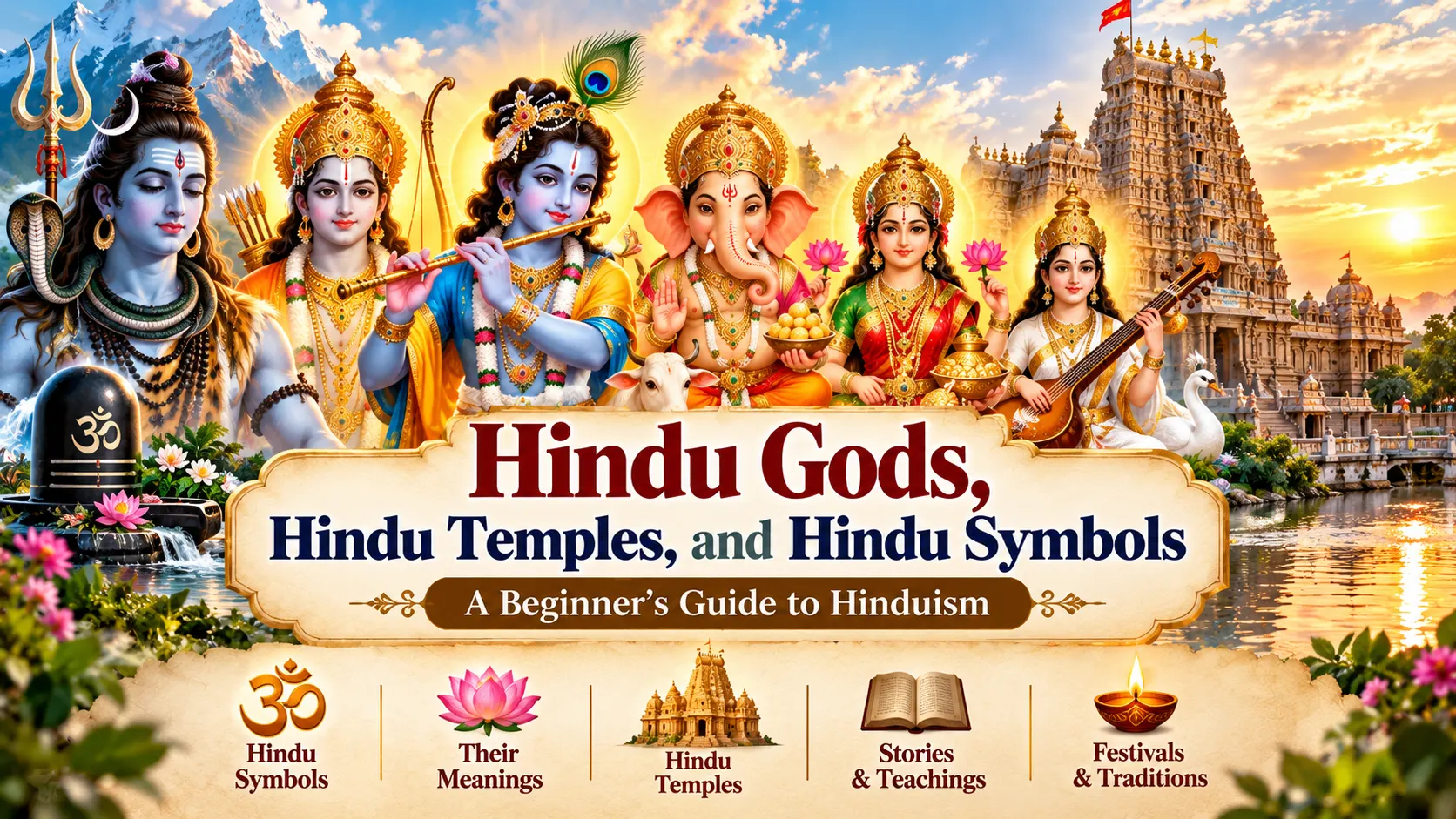
Hinduism is one of the world’s oldest living religious traditions, with a rich history of sacred stories, spiritual teachings, beautiful temples, and meaningful symbols. From the peaceful image of Lord Shiva meditating in the Himalayas to the wisdom of Lord Ganesha and the devotion associated with Lord Hanuman, Hindu traditions offer many ways to explore faith, spirituality, and the meaning of life.
For people in the United States who are curious about Hindu culture, understanding Hindu gods, Hindu temples, and Hindu symbols is a wonderful place to begin. These traditions can be seen in everyday prayer, festivals, sacred artwork, temple architecture, and family celebrations.
Whether you are learning about Hinduism for the first time, exploring Indian heritage, or planning to visit a Hindu temple, this guide introduces some of the most important deities, sacred places, and symbols in Hindu tradition.
What Is Hinduism?
Hinduism is a diverse family of religious and philosophical traditions that developed over thousands of years in the Indian subcontinent. It does not have a single founder, and its beliefs and practices vary across communities.
Many Hindu traditions explore ideas such as dharma (right conduct and duty), karma (the relationship between actions and their consequences), and moksha (spiritual liberation).
Hindu worship may include prayer, meditation, mantra recitation, offerings, festivals, and visits to temples. Some Hindus worship a particular deity, while others honor several deities or understand the divine through philosophical ideas about ultimate reality.
This diversity is an important part of understanding Hinduism.
Hindu Gods and Goddesses: Who Are They?
The Hindu gods and goddesses are central to Hindu devotional life, mythology, philosophy, and art. Different traditions emphasize different deities, each associated with distinctive stories, qualities, and forms of worship.
Here are some of the best-known Hindu deities.
1. Lord Shiva
Lord Shiva is one of the principal deities in Hinduism and is especially important in Shaivism. He is associated with meditation, spiritual discipline, transformation, and the cycle of creation and dissolution.
Shiva is often depicted with a third eye, a crescent moon, a serpent around his neck, and a trident called the trishula. These features carry different symbolic meanings in Hindu traditions.
Devotees worship Shiva in temples and at home, and the sacred form known as the Shiva Lingam is an important focus of worship.
2. Lord Vishnu
Lord Vishnu is widely worshipped as the preserver and protector of the universe in Hindu traditions. He is associated with maintaining cosmic order and restoring dharma.
Vishnu is commonly depicted with four arms holding a conch, discus, mace, and lotus. Each object has a symbolic significance in devotional and theological interpretations.
His well-known avatars include Lord Rama and Lord Krishna, who are central figures in Hindu sacred narratives.
3. Lord Krishna
Lord Krishna is one of the most beloved Hindu deities. His stories appear in texts such as the Bhagavata Purana and the Mahabharata, including the Bhagavad Gita.
Krishna is often shown playing a flute, wearing a peacock feather, or sharing stories of friendship and devotion. His teachings in the Bhagavad Gita discuss duty, devotion, knowledge, and spiritual understanding.
Krishna is worshipped in temples and celebrated during festivals such as Janmashtami.
4. Lord Rama
Lord Rama is a central figure in the Ramayana and is widely revered as an embodiment of dharma, courage, responsibility, and righteous conduct.
His life story describes his exile, the abduction of Sita, his alliance with devoted followers, and the battle against Ravana.
For many Hindus, Rama represents the importance of keeping one’s commitments and acting with integrity, even during difficult circumstances.
5. Lord Ganesha
Lord Ganesha is recognized by his elephant head and is widely associated with wisdom, learning, auspicious beginnings, and overcoming obstacles.
Many Hindu families begin important ceremonies, educational activities, and business ventures with prayers to Ganesha.
His image is also common in homes, temples, and cultural celebrations throughout India and among Hindu communities in the United States.
6. Lord Hanuman
Lord Hanuman is revered for his extraordinary devotion to Lord Rama, his courage, and his strength. His role in the Ramayana makes him one of the most widely recognized figures in Hindu devotional tradition.
Hanuman is often depicted holding a mace or carrying a mountain. Devotees associate him with loyalty, perseverance, humility, and unwavering faith.
The Hanuman Chalisa, a devotional hymn dedicated to Hanuman, is recited by millions of people.
7. Goddess Lakshmi
Goddess Lakshmi is associated with prosperity, good fortune, beauty, and abundance. She is especially honored during Diwali, when many Hindu families offer prayers for prosperity and well-being.
Lakshmi is often depicted seated or standing on a lotus, with lotus flowers in her hands. The lotus is associated with purity and spiritual beauty.
8. Goddess Saraswati
Goddess Saraswati is associated with knowledge, music, learning, wisdom, and the arts. Students, teachers, musicians, and artists often seek her blessings.
She is commonly depicted with a veena, a musical instrument, and a book. Her imagery highlights the connection between learning, creativity, and spiritual understanding.
9. Goddess Durga
Goddess Durga represents divine power and the protection of dharma. She is frequently depicted riding a lion or tiger and holding weapons in multiple hands.
Her victory over the buffalo demon Mahishasura is celebrated during Durga Puja and forms an important part of Navaratri traditions.
For many devotees, Durga represents courage, protection, and the triumph of good over evil.
Hindu Temples: Sacred Places of Worship
Hindu temples are places where devotees gather for prayer, worship, religious ceremonies, festivals, and community activities. A temple may be dedicated to one deity or include shrines for several deities.
In many Hindu traditions, the temple is understood as a sacred space where worshippers can approach the divine through rituals, offerings, music, and meditation.
Temple architecture varies across regions. North Indian temples often feature a towering structure called a shikhara above the main shrine, while many South Indian temples are known for their elaborate entrance towers, called gopurams.
Famous Hindu Temples in India
1. Kashi Vishwanath Temple, Varanasi
Dedicated to Lord Shiva, Kashi Vishwanath is one of the most revered Shiva temples in India. It is located in Varanasi, a city with a long history of pilgrimage and religious learning.
2. Shri Ram Janmabhoomi Mandir, Ayodhya
This temple in Ayodhya is dedicated to Lord Rama and is an important destination for many Hindu pilgrims. Ayodhya holds a special place in the Ramayana tradition.
3. Tirumala Venkateswara Temple, Tirupati
Located in Andhra Pradesh, this major pilgrimage site is dedicated to Lord Venkateswara, a form of Vishnu. It attracts devotees from across India and around the world.
4. Meenakshi Amman Temple, Madurai
This historic temple in Tamil Nadu is dedicated to Goddess Meenakshi and Lord Sundareswarar, a form of Shiva. Its colorful towers and intricate sculptures are well-known examples of South Indian temple architecture.
5. Jagannath Temple, Puri
Located in Odisha, the Jagannath Temple is dedicated to Lord Jagannath, a form of Krishna. Its annual Rath Yatra festival is among the best-known religious celebrations associated with the temple.
Hindu Temples in the United States
Hindu temples also serve as important spiritual and cultural centers for Hindu communities in the United States. They offer opportunities for worship, festivals, religious education, and community gatherings.
Here are some notable examples.
BAPS Shri Swaminarayan Mandir, Robbinsville, New Jersey
This ornate Hindu temple complex is known for its detailed stone craftsmanship and traditional architecture. It is a major destination for visitors interested in Hindu religious art and architecture.
Malibu Hindu Temple, California
Located in the Calabasas area, this temple is dedicated primarily to Lord Shiva and Lord Venkateswara. It serves Hindu devotees in Southern California and welcomes visitors who follow its visitor guidelines.
Sri Venkateswara Temple, Pittsburgh, Pennsylvania
Located in the Penn Hills area near Pittsburgh, this temple is an important center for worship and community activities, especially for devotees of Lord Venkateswara.
Why Do People Visit Hindu Temples?
People visit Hindu temples for different reasons, including:
- Offering prayers and participating in puja.
- Celebrating festivals such as Diwali, Navaratri, and Janmashtami.
- Learning about Hindu philosophy and religious traditions.
- Taking part in community events and religious education.
- Appreciating sacred art, sculpture, and architecture.
Visitors who are unfamiliar with temple customs should check the temple’s official website before arriving. Dress expectations, photography rules, footwear arrangements, and access to certain areas can vary.
Hindu Symbols and Their Meanings
Hindu symbols communicate religious ideas through images, shapes, sounds, and sacred objects. They appear in temples, homes, ceremonies, books, jewelry, and traditional artwork.
Understanding these symbols can help beginners appreciate the meaning behind Hindu worship and visual culture.
1. Om (ॐ)
Om, also written as Aum, is one of the most recognizable sacred symbols in Hinduism. It is associated with ultimate reality, spiritual awareness, and the sacred sound used in many prayers and meditative practices.
The symbol is commonly seen in temples, on prayer materials, and in devotional artwork.
2. The Swastika
The swastika is an ancient symbol used in Hinduism to represent auspiciousness, well-being, and good fortune. In Hindu ceremonies, it may be drawn with red or yellow powder or displayed at the entrance of a home.
Its traditional Hindu meaning is distinct from the meaning of the Nazi emblem, which appropriated a related form and became associated with hatred and genocide.
3. The Lotus Flower
The lotus is associated with purity, spiritual beauty, and the ability to rise above difficult circumstances.
It appears in the imagery of deities such as Lakshmi and Saraswati. Its growth in muddy water is often used as a metaphor for maintaining spiritual integrity in a challenging world.
4. The Trishula
The trishula is a three-pronged trident associated with Lord Shiva. It is a common feature in Shiva imagery and temple art.
Its interpretations vary, with some traditions connecting its three points to different aspects of existence, cosmic processes, or spiritual understanding.
5. The Shiva Lingam
The Shiva Lingam is a sacred form used in the worship of Lord Shiva. It is traditionally understood as a representation of Shiva and, in many interpretations, the formless nature of ultimate reality.
Devotees may offer water, flowers, and other ritual offerings during Shiva worship, according to local and family traditions.
6. The Tilak and Bindi
A tilak is a mark applied to the forehead, often during worship or as a sign of religious identity. Different Hindu traditions use different shapes, colors, and materials.
A bindi is commonly worn on the forehead and can have cultural, personal, and religious meanings. Its significance varies by community and individual.
7. The Kalash
The kalash is a ceremonial pot used in many Hindu rituals. It may contain water and be decorated with leaves, a coconut, and other auspicious elements.
It is commonly associated with abundance, life, and auspicious beginnings.
8. The Diya
A diya is a small oil lamp used during Hindu prayer and festivals. Lighting a diya can symbolize knowledge, hope, devotion, and the removal of darkness.
Diyas are especially prominent during Diwali, when homes, temples, and public spaces may be illuminated with lamps.
Hindu Festivals Connected to Gods and Symbols
Hindu festivals bring religious stories and symbols into everyday life. They are celebrated differently across regions and communities, but many include family gatherings, worship, food, music, and acts of generosity.
Diwali
Diwali, often called the Festival of Lights, is associated with themes of light over darkness and good over evil. Its meaning and stories vary by region and tradition. Lamps, rangoli designs, and prayers to Lakshmi are common features of many celebrations.
Navaratri and Durga Puja
These festivals honor the Divine Feminine in forms such as Durga. Celebrations may include fasting, music, dance, temple worship, and community gatherings.
Janmashtami
Janmashtami celebrates the birth of Lord Krishna. Devotees may sing devotional songs, decorate temples, read Krishna’s stories, and participate in midnight worship.
Hanuman Jayanti
Hanuman Jayanti honors Lord Hanuman. Many devotees recite the Hanuman Chalisa, visit temples, and reflect on Hanuman’s devotion and courage.
Ganesh Chaturthi
This festival honors Lord Ganesha. Celebrations often feature beautifully decorated Ganesha images, prayers, music, and community events.
How to Learn More About Hindu Gods, Temples, and Symbols
If you are new to Hinduism, start with one deity, one sacred text, or one tradition that interests you. Read the stories associated with that subject, learn the meaning of its symbols, and explore how different Hindu communities understand it.
You can also visit a local Hindu temple, attend a public festival, or learn from reliable educational resources. When exploring Hindu traditions, remember that beliefs and customs are diverse, and no single explanation represents every Hindu community.
For families in the United States, learning about Hindu culture can also be a meaningful way to connect children with Indian heritage and introduce friends to the traditions that matter to them.
Frequently Asked Questions About Hindu Gods, Temples, and Symbols
How many gods are there in Hinduism?
There is no single number that captures Hindu beliefs about the divine. Hindu traditions include many deities, while different philosophical schools explain the relationship between these deities and ultimate reality in different ways.
Who are the three main Hindu gods?
The Trimurti is a well-known concept involving Brahma, associated with creation; Vishnu, associated with preservation; and Shiva, associated with dissolution and transformation. Not every Hindu tradition gives these three deities equal emphasis.
What is the most sacred symbol in Hinduism?
Om is among the most widely recognized sacred symbols in Hinduism. It is associated with ultimate reality and is used in many prayers, mantras, and meditative practices.
Can non-Hindus visit Hindu temples in the USA?
Many Hindu temples in the United States welcome visitors of different backgrounds. However, access rules vary by temple, so visitors should check official guidance before visiting.
Why do Hindu gods have multiple arms?
In Hindu art, multiple arms often symbolize a deity’s many powers, qualities, or abilities. Objects held in the hands can communicate particular stories or spiritual meanings.
What does the lotus mean in Hinduism?
The lotus commonly symbolizes purity, beauty, and spiritual growth. It appears in the imagery of several Hindu deities and is used in religious art and worship.
What is the difference between a Hindu temple and a home shrine?
A Hindu temple is a dedicated place of worship that often serves a wider community. A home shrine is a personal or family space for prayer, offerings, and daily devotion.
Why is the swastika used in Hindu ceremonies?
In Hindu traditions, the swastika is an ancient auspicious symbol associated with well-being and good fortune. Its traditional religious meaning differs from the Nazi symbol associated with persecution and genocide.
What Is an Avatar in Hinduism?
In Hinduism, an avatar (also spelled avtara or avatara) means the descent or manifestation of a deity into the world. The Sanskrit word avatara literally refers to “descending.” In Vaishnava traditions, it commonly describes the appearance of Lord Vishnu in a particular form to protect dharma (righteousness), restore balance, and guide humanity.
Two of the most beloved examples are Lord Rama and Lord Krishna, both traditionally regarded as avatars of Lord Vishnu.
Lord Rama: The Seventh Avatar of Lord Vishnu
Lord Rama is traditionally recognized as the seventh avatar of Lord Vishnu. His story is told primarily in the Ramayana, which describes his life, exile, devotion to duty, and battle against Ravana.
Lord Rama is widely revered as an example of dharma, integrity, courage, and responsibility. His life teaches devotees about keeping promises, fulfilling one’s duties, and standing for righteousness even during difficult times.
Lord Krishna: The Eighth Avatar of Lord Vishnu
Lord Krishna is traditionally recognized as the eighth avatar of Lord Vishnu in the commonly followed Dashavatara list. He is one of the most widely worshipped deities in Hinduism.
Krishna’s life and teachings appear in texts such as the Mahabharata and the Bhagavata Purana. In the Bhagavad Gita, he guides Arjuna through a moral crisis and teaches about dharma, selfless action, devotion, and spiritual knowledge.
For devotees, Lord Krishna represents divine love, wisdom, compassion, and the importance of performing one’s duties with the right understanding.
Why Does Lord Vishnu Take Avatars?
A well-known verse from the Bhagavad Gita (4.7–4.8) describes the appearance of the divine when dharma declines and adharma increases.
The central message is that the divine manifests to protect the righteous, oppose destructive forces, and restore dharma.
Hindu traditions recognize different lists and interpretations of Vishnu’s avatars. Rama and Krishna are especially important in Vaishnava traditions, where they are worshipped as divine manifestations of Vishnu.
Final Thoughts
Hinduism is a diverse spiritual tradition with a rich collection of deities, sacred places, and symbols. Learning about Hindu gods introduces the stories and spiritual ideas that shape Hindu devotional life. Exploring Hindu temples reveals the importance of worship, architecture, and community. Understanding Hindu symbols helps explain the deeper meanings expressed through sacred art and everyday rituals.
For readers in the United States, these subjects offer a starting point for understanding Hindu culture, whether through books, local temples, festivals, or conversations with Hindu communities.
Approaching the subject with curiosity and respect makes it easier to appreciate both the diversity and the enduring significance of Hindu traditions.